


My mom’s dad was one of eight children growing up in rural Illinois, so when I was young, I remember going to a lot of funerals of great-aunts and great-uncles. The quiet solemnity of the funeral home, the black-clad guests clutching tissues, the murmured condolences (“You have our sympathy”) at the head of the seemingly endless line to wait to see the dearly departed in their shiny coffin draped with vibrant blooms and ribbons with gold lettering that read “Mother” or “Brother” or “Wife” are inscribed in my early memories of death. We attended; we witnessed the grief; we honored the dead in a way that I am coming to realize is not how everyone does it.
When studying different cultures around the world, one thing that strikes me is how differently each one navigates death. Although death is something that is universally human, different people certainly see death in different ways. This is true even in how one defines death: In some cultures, death is seen as a complete cessation of life, an end with nothing on the other side; in others, death is defined as a transition to something more and better, something divine and rapturously mysterious; in still others, death is merely a step toward a rebirth, reincarnation, or even moving into an infinite space of ancestorhood. Of course, many of those definitions are dependent on religion and morality of a culture, but even in the rituals of death, there is much diversity throughout the world. For instance, Muslims tend to practice immediate burial (no embalming) with the body of the deceased facing Mecca. They hold mourning periods of 40 days, focusing on community support. In the Jewish culture, people also lean toward a fast burial and then the family sits shiva with 7 days of intense mourning. Buddhists in Tibet practice sky burials, dispersing the remains to nature, emphasizing returning to the elements, and in the Hindu culture cremation is often done by the Ganges River, with a focus on spiritual purification. In Japan, they too practice rituals of purity, believing in an afterlife where body integrity matters. If you visit Madagascar and come upon a death practice there, you might be startled to witness the “turning of the bones” ritual, where families exhume their ancestors’ remains to dance with them. And then, of course, there is the iconic New Orleans Jazz Funeral, a unique blend of African and European traditions, with somber processions to dirges and celebratory music on the way back. (I have one dear friend who wants such a ritual, but her family didn’t think that our small community was ready for that, so I told her that we would celebrate her with a trip to NOLA, and we’d have our own little parade in her honor.)
No matter the culture, honoring the dead is part of the practice, but so often it feels hard for the loved ones of the dead or dying to do that when we are so caught up in our own complicated emotions in the transitional phase from life to death. Today many people plan ahead for their funerals, making all of the arrangements ahead of time so that their loved ones can simply grieve and not have to make many complicated decisions. I appreciate that my parents have done this, and one of my favorite stories about how my family of origin is approaching the inevitable is that we spent one Mother’s Day not long ago in the cemetery, not only laying flowers on my grandmothers’ graves but also exploring the headstones to help my parents decide what they want on theirs (they’ve since decided: a rosary for my mom and a quail for my dad with their names and wedding date and my name as their only child). It was actually a lovely day together, talking about the things they want so that I know. Dad showed me where their plot is (I thanked him for choosing one right next to the road so that they would be easy to find and access!) and told me all about the “neighbors” who were already around them or would all be together in that space some day. It felt nice to be able to talk about something that so often we do not talk about, something that is inevitable because none of us are getting out of this journey alive. All of our stories will have a final chapter, a last page, a “the end” - at least on this plane of existence.

To make death and talking about it a little more comfortable, I decided to host a Death Dinner as part of my 50by50. I have to give credit where credit is due here: My young friend Mary told me a few years ago about her mom having a Death Dinner with her friends, where they got together around a dinner table and talked about death and dying. What a novel idea! I was intrigued and looked into it, and lo and behold, there is a whole movement called Death Over Dinner. They offered resources that helped me to prepare for our gathering.
Since January is a liminal space sort of month, cold and usually not as busy, the beginning of things and the ending of other things, it felt like the right time to put a Death Dinner on the calendar. (Interestingly, it also happened to be the weekend between my biopsy and learning the results of that procedure, so I’ll admit that death was more at the front of my mind than usual.)
Deciding who to invite was something that took a bit of contemplation as I wanted to invite all of the people who I love to the table, but - on the advice of some of the people I studied in preparation - I elected to keep it to a list of 10 people, all women who have been in my life for years, dear friends who have shared their souls with me and made sacred space for me to do the same. These were 10 women of varying ages and diverse experience from different places in my life, but all of them were deeply thoughtful and willing to be vulnerable and I knew that the conversations would be rich and open-hearted. So on the first day of 2026, I sent a text message to all of them that read “As you may know, a few years ago I compiled a 50by50 list - experiences to embrace by the time I turn 50. Some of them have been fun (vacations and salt yoga and canopy climbs), but some are more practical (deleting emails and photos, getting my RealID) and this one is practical but I want to also make it fun(-ish).
While we are all living - and hopefully living abundantly and well - I also am mindful that we all die. I know death is a scary, uncomfortable topic for many people, but I’d like to shed that taboo a bit with a Death Dinner.
Who: I am inviting a handful of my dearest, most-trusted friends. You are one of them.
What: a social gathering where we share a meal and have open, guided conversations about death, dying, and end-of-life wishes to encourage proactive planning
When: Saturday, January 17 at 6 p.m.
Where: At our home
Why: It’s a way to connect, share experiences, and make plans for the inevitable.
How: A simple meal with discussions on topics like funerals, legacy, and personal end-of-life plans; a safe space for deep, meaningful dialogue
*******
In essence, a death dinner transforms a meal into a powerful tool for living more fully by confronting mortality together.
*******
Please RSVP by January 9. Include your favorite drink, snack, meal and dessert when you RSVP.”
I received replies from everyone with only two friends unable to attend because of other life commitments. Unfortunately, another dear soul was unable to attend because in the week before the Death Dinner, her mom was actively dying and the unknowns of that liminal space made it impossible for her to be in both places, which we all understood and responded to with love and support and prayers.
The week of the Death Dinner was a busy one for me because of the biopsy, three meetings with spiritual companion clients, my daughter’s performances with the Spirit band at her college’s basketball games and more, so I didn’t really think much about it until the day of. All of the plans for WHAT to do had been made in December, but that day was a lot of figuring out HOW to do it: My son helped me to get groceries in order to make my guests’ favorite foods. The menu included a cooler of Diet Coke, water, lemonade; a bar of appetizers (spiced pecans, salsa with chips, cheesy bacon bites, popcorn and almonds). Our main course was spicy butter shrimp with rice, Dewey’s salad and a pizza made with dough from a recently-closed and much -beloved local bakery, a homemade sauce and lots of cheese. Our dessert menu included cherry crumble, luscious chocolate cake from a local eatery, a colorful fruit salad and a bowl filled with a variety of dark chocolates.
I spent an afternoon in the kitchen, composing a meal that I hoped would be enjoyed by my guests. It is always a joy for me to cook, so it was a lovely way to shift into the evening.
As the pizza and cherry crumble baked in the oven, I covered the table in a white cloth and placed fabric markers around the centerpiece. When my children celebrated their first birthdays, my mom made them tablecloths where guests could write their birthday wishes, and I chose to use the same idea with our Death Dinner: Guests could jot down notes and their thoughts throughout the evening. I also laid at each spot a folder with four items in it: A list of the questions that we would be discussing, a selection of quotes about death and dying, a To-Do list before death and a Death Folder list of things to prepare for loved ones. In addition, everyone was gifted a blank journal as a place to keep their ideas, thoughts, notes.
The centerpiece was an evergreen wreath (symbolic for the season but also the theme of the evening) bristling up between a gold candelabra which held four white pillars. In the center of those pillars was a crystal vase my husband and I had received as a wedding gift, and one red rose for each invitee was bathing in the water of the vase until it went home with the guests at the end of the night.
Candles were lit, food was put out and guests started to arrive. Many of them knew one another from previous retreats or other events, but there were a few re-meets and new connections made. As I wiped off my grandmother’s fine china (never used in the 28 years that it has shared a home with me!), everyone got settled and snacked on the appetizers that covered the counter.
As we all found places at the table, I began with a tearful speech about why each of them was invited. I was tearful because my whole being was filled with such gratitude for the gifts of these friendships, so many years together, so many heartfelt conversations, so much these women and I had walked through together…and now we were going to talk about death.
I invited each of them to share their name and how they responded to the invitation, and everyone was so open and eager to dive in. A topic that would be uncomfortable for some was quite warm and welcoming for this particular group - of course it was.
The next part of the evening was the one I knew might be hard for some: Every woman at the table had the opportunity to talk about someone she loved who had died, and then we lit a candle in their honor. Some losses were particularly tender as they were recent, and others brought more smiles than tears because the grief had softened over time. We all listened carefully to the words spoken as we got to know more about each other by learning more about the griefs we had experienced. Of course, there were lots of tears shed but also lovely stories shared and the room felt full of the presence of those we honored, those we named but also all who went before us. We toasted to each of those named and to all of the people we loved who we knew would meet us on the other side.
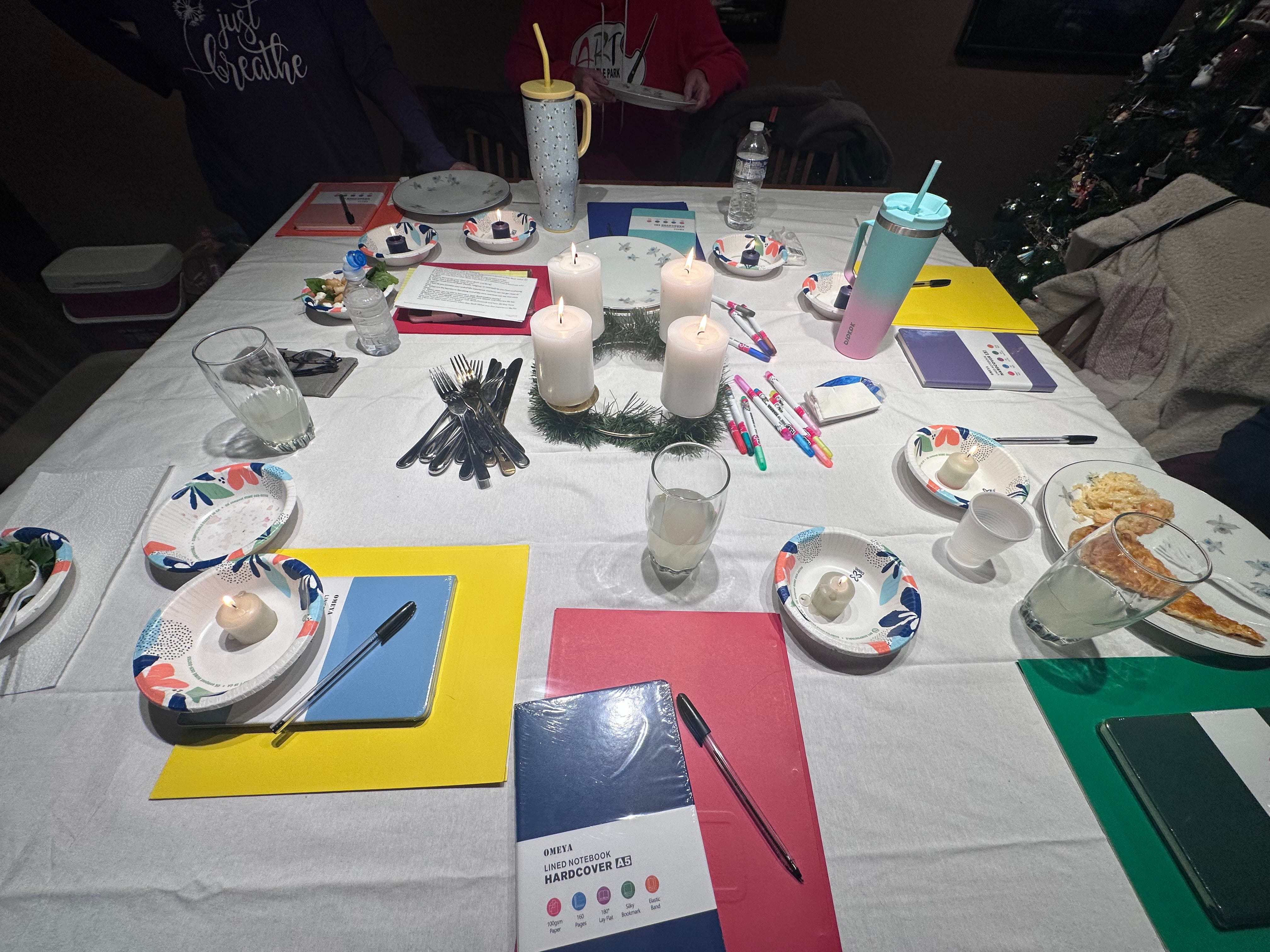
To move into the next phase of the Death Dinner, we passed around a small jar that contained strips of paper with questions that were meant to serve as ice breakers. Each guest drew a question and took time to thoughtfully respond to it, and thoughts were shared around the table as we worked through the first set of questions to help us clarify where we were individually in our ideas about death.
As we began our main course, another larger jar was passed around. This time questions were more focused on death and dying specifically. We discussed end-of-life options, our experiences with being with those who were actively dying, how to honor wishes and all the obstacles that can come along the way. It was an honest conversation with many stories and thoughts shared, all helping us to consider things we may not have considered before.
As the candles burned lower and the plates became empty, it was time to move onto the last set of questions. These came around in a large container, and these queries asked us to consider funerals. We noticed that the types of funerals that most of us remember from our younger years have shifted and there is more diversity in how families handle death, everything from parties with music and food and brightly dressed guests to not having anything at all. Most of us agreed that we didn’t want our funerals in funeral homes, and we laughed about not ever wanting to go back to the times in the past when people took photos of their loved ones in the casket. We vowed to not let that happen for each other!
At this point in the evening, we were able to move more from ideas to practical applications of how we want to transition and how we want to be remembered and how we want others to celebrate our lives.
Most of us agreed that we don’t want to live forever on machines; many of us hoped to die peacefully in our sleep - although we all clearly recognized that our actual death was beyond our control. We told stories about loved ones on the verge of death who waited for someone to arrive before they passed, which gave us pause to consider how much power we actually do have in those final moments.

We delved into our own feelings about death. The overwhelming majority of us had no fear of death. For those who feared death, it was not death that scared them but only the pain of death. This fear likely arose from watching a loved one pass in a way that was not peaceful. Where there is not peace, we often assume that there is pain, but others around the table attempted to assuage the fear by speaking of their own stories where they knew the dying person’s pain was managed by medication.
For most of us, the biggest concern we had with our own death was leaving our loved ones, especially our children - especially those of us who have children who still live at home, but all of us know the heartbreak that our children will feel when we’re gone. Some of us at the table felt the struggle of considering that not just for our children but as children who are fortunate to still have living parents. The full circle that goes on and on, life and death from generation to generation, was evident in our conversation about our own grief at our own deaths.
We talked about what we’d want to do with our bodies: donation was a big yes for many of us, and cremation seemed to be the plan for most, but others had their burial plot picked out and purchased. One friend has decided to do a green burial, which was a fascinating conversation.
Some of us were still considering all of the options. (If anyone is interested, I am leaning toward flameless cremation.) For those who plan on cremation, we talked about where we’d want our ashes spread. (My take on this is a little unorthodox, but I want to have my ashes in vials available at the celebration of my life so that family and friends can take me wherever they have fond memories of us together. The girls around the table told me that they would take me to my local labyrinth where my love of labyrinths began, in the Wabash Woods and at the Cathedral Labyrinth and Roofless Church in New Harmony. Another friend once told me she would take my ashes to a hiking trail that the two of us enjoyed years ago - one of her favorite memories, she said. I really would love to know where people would take me!)
We talked about monuments and epitaphs and obituaries (most of us want to write our own so that, as one of my dear friends at the table said, “they’re honest and not making me look too perfect!”)
We discussed funerals: Some were uncomfortable with giving people the option to stand up and talk because it puts people on the spot. I said that I wanted people to write me letters about our times together, their memories of me - a collection of memories that my children could have that might paint a broader picture of me than the mom they knew.
One friend shared a beautiful experience she had with her father’s funeral: A friend of his reached out on social media and asked people who knew him to send one word they would use to describe him, and he compiled a list of the words (including notes on those words that had been submitted multiple times), and at the funeral my friend slowly read the list aloud.
We shared what we’d want on display at the celebrations of our lives, where we’d want donations to go. We also noted that these might change over time, as our wills and guardians for our children and power of attorney and medical power of attorney might also change over time. In all of these conversations, it was clear that we were all aware of the reality of death but also at the constantly changing state of being alive. There was an openness and a comfort with that with these women, something that I know would not be true for every person.
As chocolate cake and cherry crumble and fruit salad were enjoyed, the sweetness of the plates also turned into a sweetness of words as the talk turned unexpectedly to what comes after death. I had not intended for that piece of the puzzle to be put into place, but there it was…and what a gift! To hear each woman talk about her views of heaven, her hopes and wishes and images and openness to what glorious experience it might be was so beautiful. I especially loved my friend Lynnette’s take on death: She compared it to two things, light and water. She believes that the Divine brings each of us into the world as a bit of Their own light, straight from the source, and when we die we simply return to that perfect light. (I absolutely love this idea because light is powerful and bright and lovely and necessary.) She also compared death to being a drop of water near to a puddle of water, drawn in through cohesion to return to the larger body. The idea of being a part of something bigger, something mysterious but powerful is so appealing and rings true for me.
Some considered the next phase as a chance to do a better job the next time around. We talked about what that might be like, and about the veil between worlds and how thin it sometimes feels. There was a freedom to talk about the spirit world and ghosts and all of the times that we have keenly felt the presence of those who have passed, whether we knew them or not.
Others imagined the other side as everything of this world only the way it was intended, no conflict or disease. Still others saw each person’s heaven as unique - our own little houses with our perfect idea of heaven, but we could still visit other people’s houses. We talked about how when we come into this world it is from a darkness where we don’t know what’s next: We travel through a tunnel or are lifted from the dark into the light. Maybe the transition to the next life is the same way: moving from our own ignorance through another tunnel into a brighter light and a better world. We all came to the conclusion that whatever is on the other side of this life is not fluffy clouds and angel wings and white robes and harps but something bigger and better than we can fully imagine. What a thing to look forward to!
As the night grew long and the candles burned even lower, I asked my son to come take a photo of us to commemorate the occasion. He was glad to capture the picture of us, smiling, holding our roses, arms around each other - the lightness of hearts and joy of what could have been a depressing evening seems to shine through in the image I cherish.
A closing ceremony invited each woman to turn to the sister on her left and share something that she learned from her over the course of the evening. It was a lovely time to bind the circle together. I shared my gratitude for each of them - that night and in my life, once more with tears that I refused to hold back.
And with that, the evening was over. Coats and hats and gloves were donned; tight and long hugs were shared; farewells were said…until next year when we will reconvene for another Death Dinner. I know things will likely change in a year, but whatever the next 12 months brings, I am profoundly blessed to have had this beautiful evening. Although I didn’t quite know how it would go, I trusted the women at the table and the process and myself to allow it to be what it was - something more extraordinarily beautiful than I could have expected.
I think this is fabulous. 🙏🥰