I can navigate better than I expected: maps, the maze of the abbey, meals, my own emotions.
My few hours in the forest, reading a map and following those big yellow footprints were good preparation for getting comfortable with the ups and downs and lefts and rights of the abbey spaces. Even at mealtime, I learned to figure out where to get the food and where to sit (in the first room, which was silent save for the music piped in, and with a fantastic view of the garden where I watched hummingbirds and cardinals and yellow finches and doves and robins fly and feed) and where to and how to bus my dishes.
As for my emotions, I was open to wherever my emotions would go on this trip, and I tried to stay in touch with them, which got easier to do in the silence of the retreat. On the drive, I noticed my legs tightening up in city traffic and my torso hunched forward in anxiety. While at the abbey, it was hard not to notice the tears that streamed down my face as I read and reflected in the reception area and on top of the knob across from the abbey and sitting in the balcony of the church in prayer. This leads to the second thing I learned:
Sometimes I cry, and I don’t know why, but I trust that it’s happening for a reason.
When I was growing up, tears were not really welcomed. Instead, I was told to grow a thick skin and that I was too sensitive. I know now that my thin skin and easy tears are my own superpower because it is a gift to truly feel. One thing that I did on this retreat was to try to give my feelings space in a way that I can’t always in the day-to-day distractions of the real world. So on that first evening, as I sat reading a book in the reception area and unbidden and unexpected tears started streaming down my face in the presence of strangers, I let them. I wiped them away with no shame and allowed them to come, even though I didn’t know their origin.
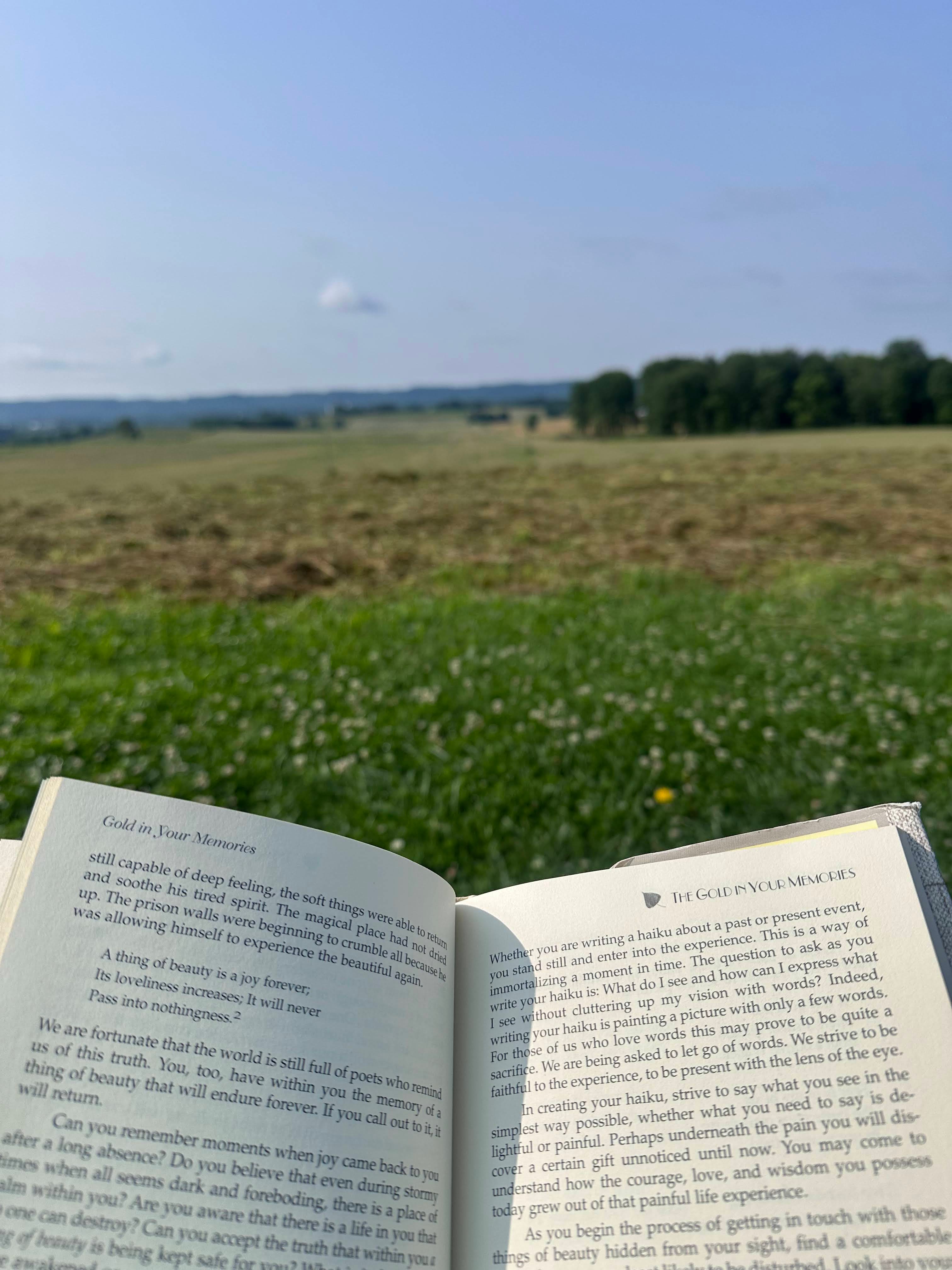
On top of the knob on the second morning, tears came again as I sat with my journal and my books and the sun shining down and a team of tiny bees who thought my bright pen was a flower. Looking out over the rolling hills and fields of wheat and mown clover, the swallows diving nearby, I was surprised again when my eyes began to leak. I was moved by gratitude for the beauty of the moment and missing my family and reflecting on my younger years, so it’s possible that a combination of those things called forth the tears, but I couldn’t pinpoint it then or now.
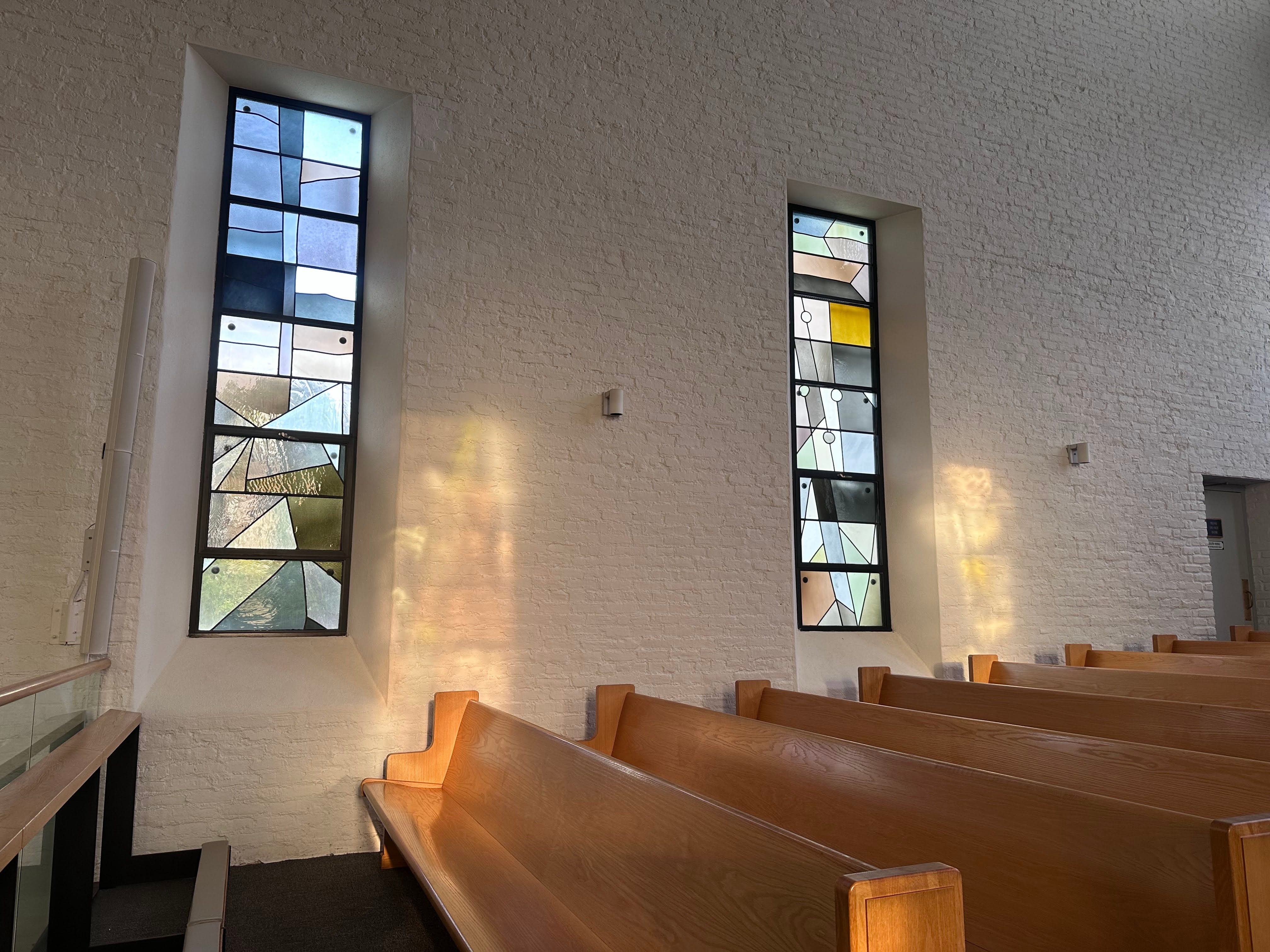
Early on the third morning I awoke to join the monks (and two other retreatants) for 3:15 a.m. vigil in the church. While I chose not to participate in the chanting, I did kneel and pray, and those heartfelt, early morning words to God brought another waterfall of tears that kept me kneeling in that balcony long after the others had retired, until my eyes were dry and tears were spent.
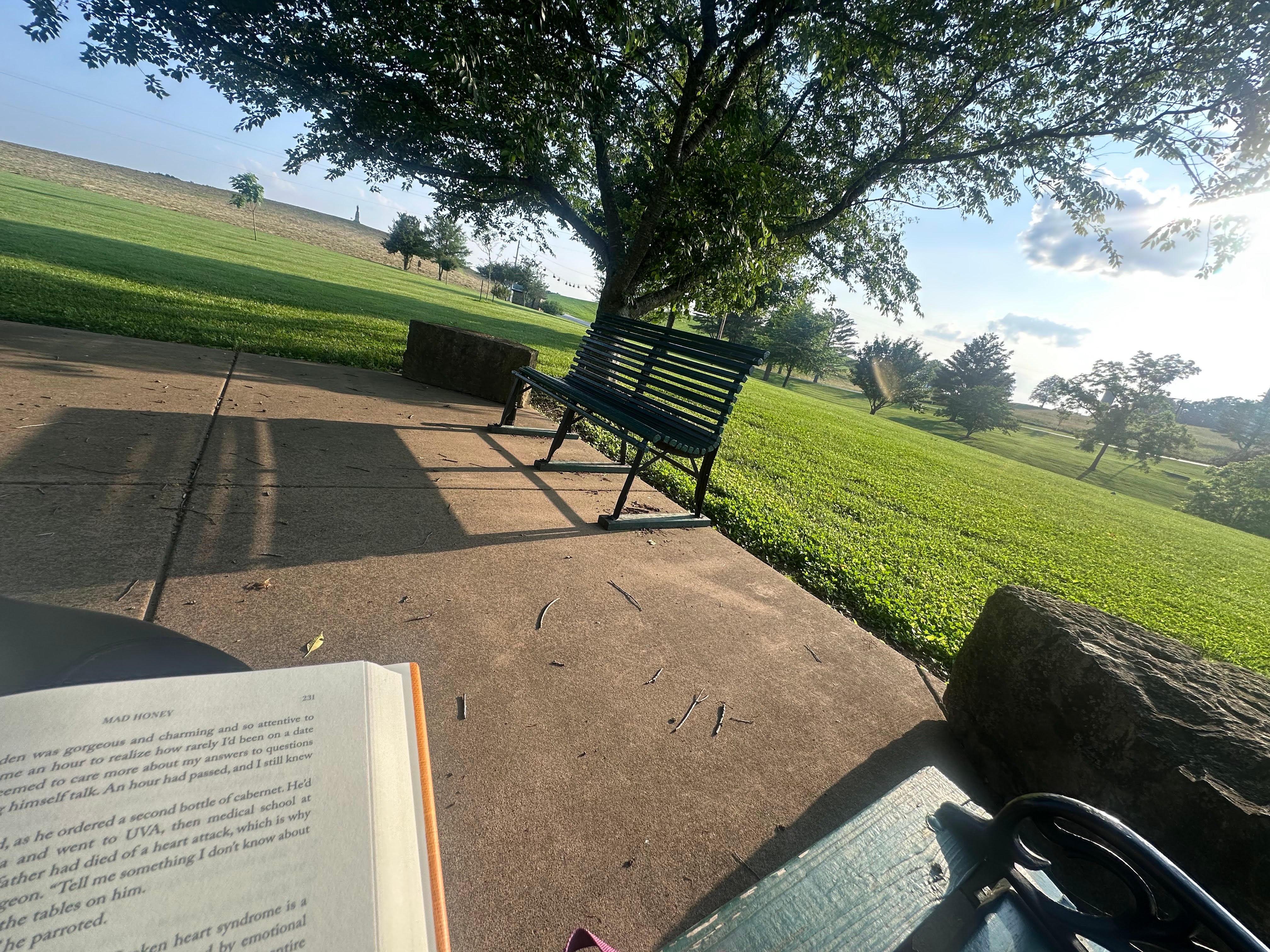
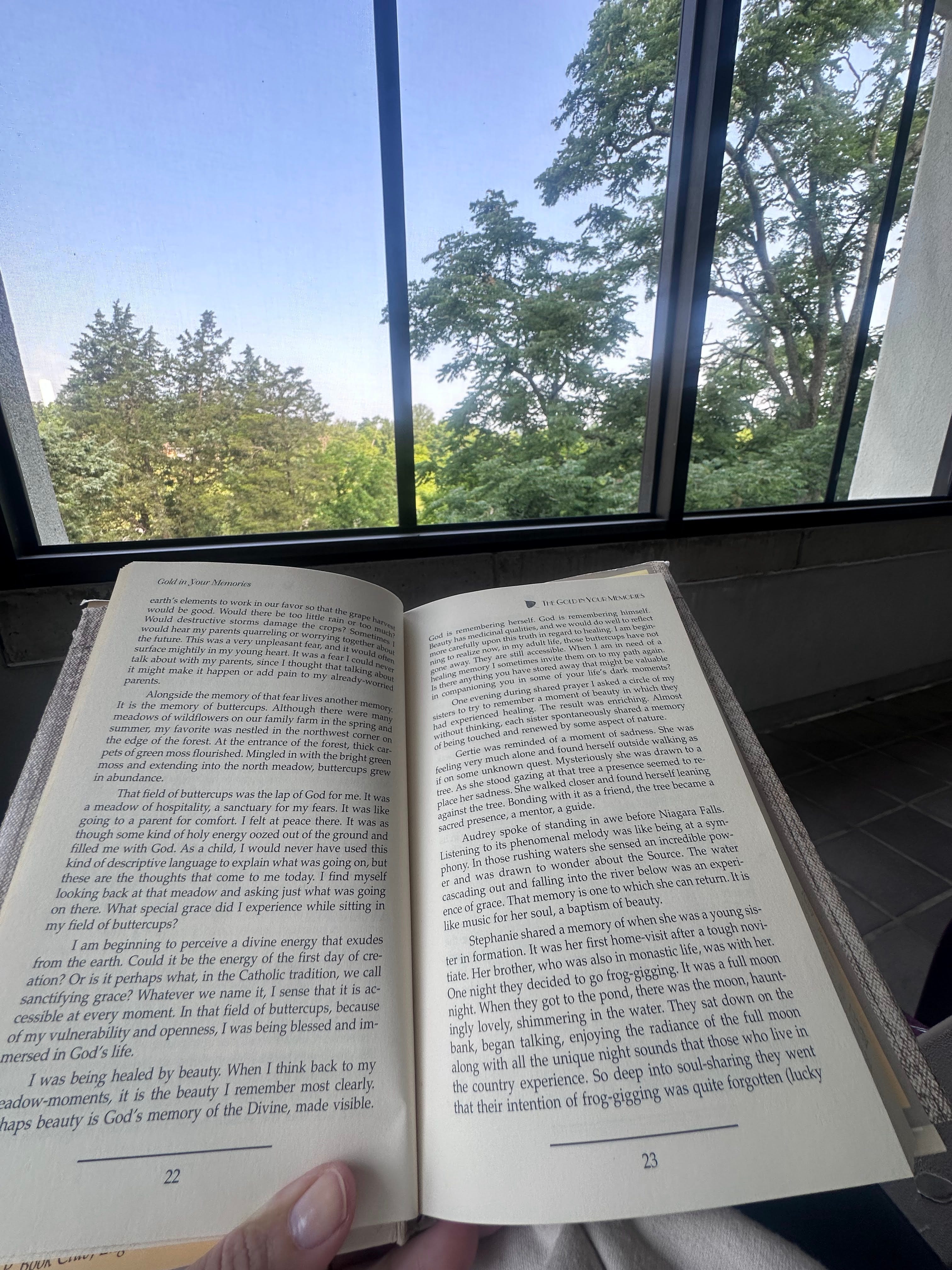
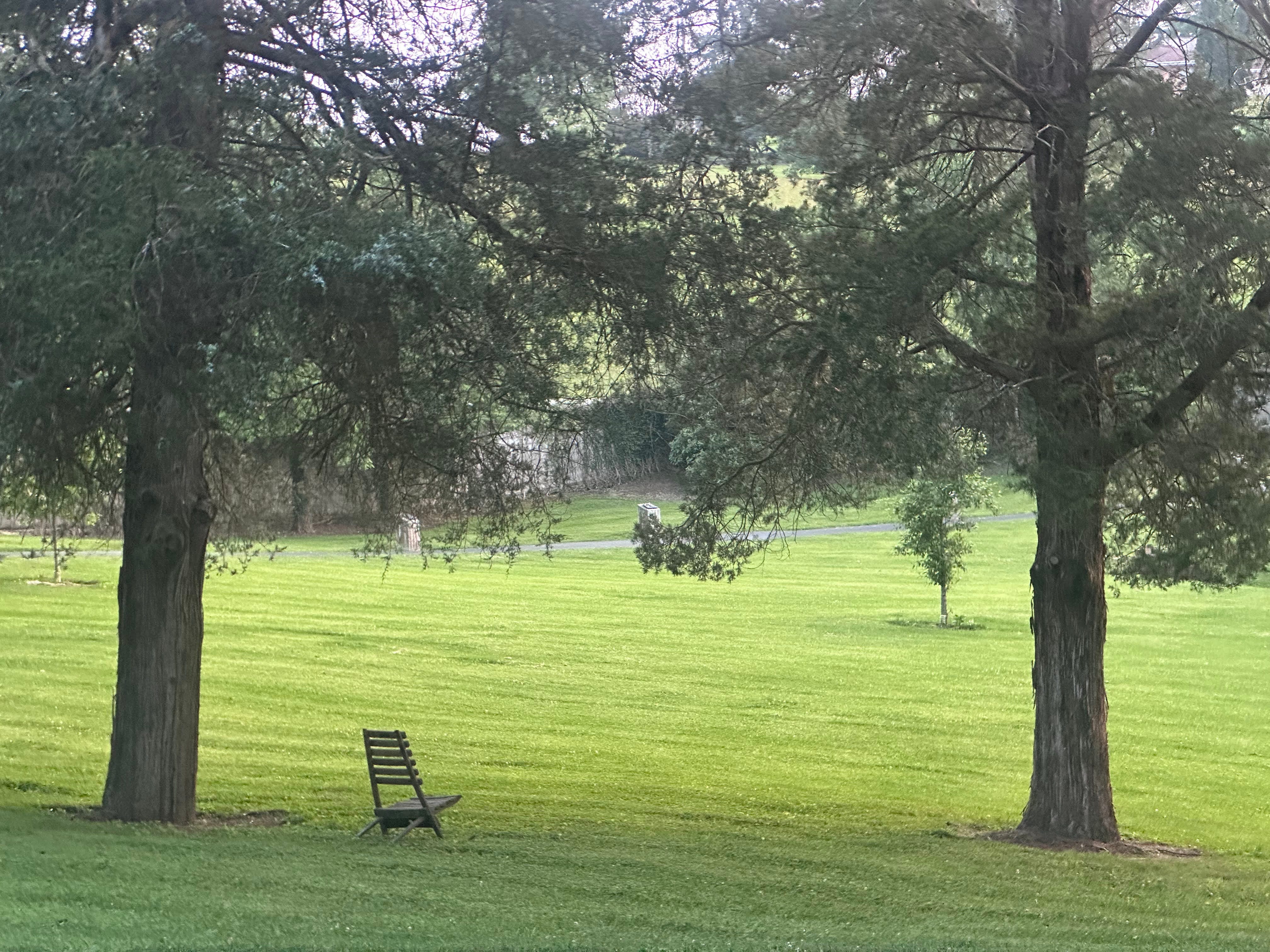
Another moment of weeping found me sitting on a bench on the front lawn of the abbey, basking in the sunlight that had been fading in the hours that I had been sitting there. Although I had brought six books with me, I ended up spending most of my time with one, a novel by a favorite author, a tome that was solely there to entertain me. At almost 500 pages, I devoured the story of Mad Honey, page-by-page, sitting on the screened in porch off the library or in my little room or under a tree in the garden or on top of the knob or on that bench in the front of the abbey. When I came to the final pages of the book, I ugly cried, so attached was I to the characters and the storyline. While under other circumstances, I might be embarrassed to be crying over a piece of fiction, but I openly let those tears roll in its own catharsis - learning (and purging our own emotions) from another’s story as the Greeks intended.
The right books come to us when we need them.
In my retreat bag I had stashed away Lauren Artress’s The Sacred Path Companion, Hillary McBride’s The Wisdom of Your BodyandPractices for Embodied Living, Cat Bohannon’s Eve, Richard Rohr’s The Tears of Things and Mirabai Starr’s Ordinary Mysticism. Did I open any of them? Nope. I finished Jodi Picoult and Jennifer Finney Boylan’s Mad Honey, to be sure (and felt zero bad about reading a book for entertainment on retreat, might I add?) But the book that I want to talk about here is a book that has found me on almost every retreat, and it was my touchstone for this time away: Sr. Macrina Wiederkehr’s Gold in Your Memories was found on the shelf in the retreat house library, as it has been on the shelf of every library of every retreat house I have visited over the years. I was first introduced to Sr. Macrina years ago with her book, Seven Sacred Pauses, which is a beautiful and accessible introduction to the monastic hours. Her writing is stunning in the simple and honest way she weaves a story and shares profound insights about spirituality. This book was no different. The premise of the book is to invite readers to dig for the preciousness in their memories, even the difficult ones. And Sr. Macrina does not ask readers to do this without modeling it herself, and her personal stories give readers a well-developed idea of who the late Sr. Macrina was and why she was - and continues to be through her writing - a gift to the world.
Rarely do we have the opportunity to simply remember, to sift back through our days and weeks and months and years to the stories of our past. Gold in Your Memories gave me the prompts and the permission to do just that, so when I wasn’t reading Mad Honey, I was reading the words of Sr. Macrina and remembering and journaling…and crying a little too.
Silence can be profound, and then it can be deafening.
I distinctly recall the power of the silence in the church when J and I initially visited, and that silence was my early lesson in the silence of this retreat. While I attend quiet retreats each March and have been on retreat when other retreatants in the house were practicing silence, this experience was new to me. The monks and retreatants have an unspoken understanding that there will be no talking in the retreat house, save for a few areas. I appreciate that silence is not easily found in today’s world and that silence is one of the ways we can hear God’s still, small voice - and sometimes even our own if we’re not familiar with it…but settling into such deep silence honestly took some getting used to. One thing that I discovered is that even when the world outside is quiet, our minds and spirits may not be, so part of my learning was to settle into the silence not just of the space but also to reach for internal quiet as well.
I learned to listen to my own voice and lean into intuition.
In discovering my internal quiet, I learned the sound of my own inner voice. One gold nugget in my memory, one that I have allowed to stay rough and doesn’t really shine but is valuable nonetheless, is the feeling of not being heard, the idea that my voice didn’t matter. As a child who was always told how quiet I was, it is in just the past year I have recognized the value in my voice, and I have been taking steps to discover the power of my voice - be it quiet or loud. I know the value of words, but now I am learning to listen for and amplify my own voice, what I want, what I need, what I push back against. THIS is one of the most important things I have learned as of late, and this retreat gave me a chance to practice listening to and honoring and empowering that voice which has been inside me all along.
In the last six months, I have been finding myself using my voice more loudly and more honestly and with less shame and more assertiveness than ever before. In the fall, my spiritual director suggested that we work on my voice with some exercises; at the time, I knew she was onto something, but I needed to pursue it on my own first, so I told her that I wanted to do it but later, and by the time I saw her again, I had a powerful experience of difficult honesty that broke down decades of me suppressing my voice. When I told Kelley the story of me speaking my truth in that moment, she said, “You found your voice.” And I did. This retreat gave me the chance to explore what that means to me: It meant practicing the art of intuition and trusting that intuition. For instance, I had originally planned on visiting those seven labyrinths in Louisville but the tension that rose when I anticipated navigating the city felt counterintuitive to the retreat experience and a premonition and the accompanying fear led me to stay an extra day at the abbey instead of venturing out. Do I regret that? Not a bit because it was more practice at listening to myself.
Another example: I had moments where I felt unsure about spending five hours on a bench reading because it didn’t feel productive and what I was reading wasn’t spiritual in nature. My inner voice’s response to those objections? “So what? You’re on a retreat. You do what feeds you. No one is judging you. Don’t judge yourself.” Wise words, that inner voice of mine!
Another moment of listening to my inner voice was when I was experiencing but not participating in the canonical hours. On the second day, I vowed to attend all seven sacred pauses. When I attended the first one on my first night, I sat in the front and had the book in hand but couldn’t follow along. While others around me stood and bowed and chanted, I sat there wordlessly. Not knowing the protocol (again, navigating something new!), the voice inside my head gave me permission to simply experience the chanting and the reading. I did not need to engage to savor the moment.
I listened more to my inner voice when it was time to eat. Not hungry? Don’t eat. Don’t want to have dessert? Leave that fruitcake there. Need a bedtime snack? Snack away!
I listened to her when it was time to get up in the morning and go to bed at night. Tired? Hit that snooze. Want to read one more chapter? Go for it.
I listened to her when I started to sunburn on top of the knoll and when I got too hot on the bench, and I found a new place to be.
When my intuition told me something that the rest of the world couldn’t see, I listened.
Noticing my fear was part of that listening.
Shannon’s Substack is a reader-supported publication. To receive new posts and support my work, consider becoming a free or paid subscriber.